Please join us for a presentation on how metals impact urban stormwater from Dr. Kristen Croft. See details below for our first event of 2026!
Title: Interactions and Treatment of Metals in Urban Stormwater
Date: Tuesday, March 3
Cost: Members $10, Non-Members $20, Virtual Free
Dinner will be provided and please contact Tasha Neel ([email protected]) with dietary restrictions.
Virtual Link:
Meeting ID: 222 156 768 628 81
In-Person Location:
Carollo Engineers
11030 Circle Point Rd Suite 400
Westminster, CO 80020

Abstract:
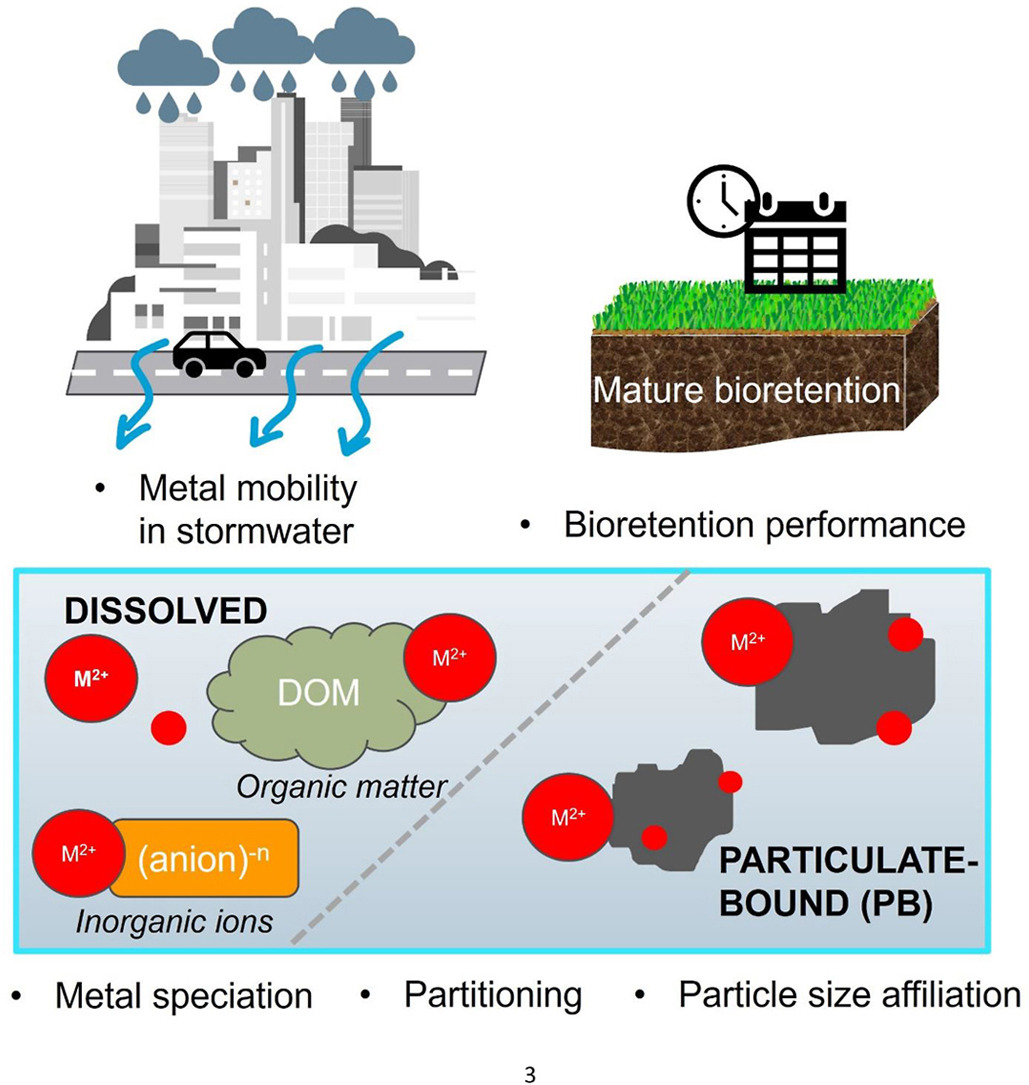 Urban stormwater contains a cornucopia of pollutants that pose direct toxicity risks (e.g., metals, organics, pathogens) and indirect adverse effects (e.g., sediments, nutrients) to aquatic life. Metals, specifically copper (Cu) and zinc (Zn), are both ubiquitous in the urban environment and detrimental to aquatic ecosystems at low concentrations (approximately 10 ppb). Targeting this growing source of pollution upstream is critical in providing necessary environmental protections, especially as the intensifying effects of climate change and urbanization are imminent.
Bioretention is a stormwater control measure (SCM) that mimics natural systems to take advantage of the natural filtering processes. In addition to hydrologic benefits, bioretention provides removal of particulate matter (PM) through filtration and sedimentation, and potential removal of dissolved constituents through chemical and biological processes. Studies including characterization of stormwater, road-deposited sediments (RDS), and performance of a mature bioretention cell were performed to determine treatability, mobility, and bioavailability of Cu and Zn in stormwater and through bioretention treatment. The mature bioretention cell was effective at reducing PM and particulate bound metal loads, but dissolved constituents went unchanged through bioretention treatment.
Alternative media amendments were investigated for further reduce dissolved metal loads. Black carbon media including biochar, granular activated carbon, regenerated activated carbon, and a natural mineral sorbent, clinoptilolite zeolite, were tested in continuous columns, and in up-scaled modular treatment columns. The four tested BC media performed similarly for Cu and Zn removal, with Zn having an earlier breakthrough compared to Cu. Modular treatment columns showed that traditional bioretention soil media provided effective removal of dissolved Zn and ineffective removal of Cu. The subsequent BC polishing module was effective for Cu removal, and zeolite showed potential for Zn removal.
Overall, dissolved metals in stormwater are the most mobile, bioavailable, and difficult to remove through traditional filtration-based SCMs. This research showed potential applications for extending the life of filtration-based SCMs and incorporating media amendments to enhance dissolved metals removal